The healthcare industry is rapidly moving online. Patients today don’t want to stand in long pharmacy queues—they want medicines delivered...



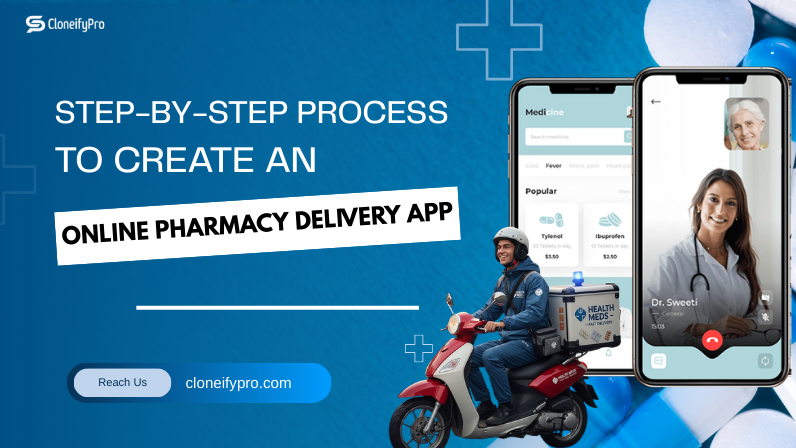
The healthcare industry is rapidly moving online. Patients today don’t want to stand in long pharmacy queues—they want medicines delivered safely to their doorstep.
This shift has created huge demand for online pharmacy delivery apps like 1mg, NetMeds, PharmEasy, and Apollo Pharmacy.
If you’re planning to launch a digital healthcare startup, hospital platform, or medicine delivery business—building an online pharmacy delivery app is one of the most profitable and scalable ideas in 2026.
In this complete guide, you’ll learn:
• How pharmacy delivery apps work
• Required features
• Legal requirements
• Technology stack
• Development process
• Cost estimation
• Launch strategy
Let’s begin.
An online pharmacy app allows customers to:
• Upload prescriptions
• Order medicines online
• Get doctor-approved drugs
• Track delivery in real time
• Receive medicines at home
It connects customers, pharmacies, delivery agents, and administrators in one digital ecosystem.
User uploads prescription
Pharmacy verifies it
Medicines packed
Delivery partner assigned
Order delivered
This simple system solves a real-world problem: access to medicines anytime, anywhere.
• Aging population increasing
• Chronic disease patients rising
• Telemedicine growing
• Digital payments adoption
• 24/7 healthcare demand
People now prefer convenience + safety + authenticity.
That’s why medicine delivery apps are becoming a core part of modern healthcare infrastructure.
Before development, choose your business model.
One medical shop sells online
Best for local pharmacies
Many pharmacies join platform
Best for startups
Linked with clinics & hospitals
Best for healthcare groups
Monthly refill for chronic patients
Best for diabetes, BP, thyroid patients
CloneifyPro supports all these models with scalable architecture.
Start with understanding your target users.
• Who are your customers? (elderly / parents / patients)
• Which medicines sell most?
• What regulations apply in your country?
• Who are your competitors?
Users struggle with:
• Fake medicines
• Prescription confusion
• Out-of-stock drugs
• Long waiting time
Your app must solve these problems.
This is the most important step.
Online pharmacies must follow strict healthcare regulations.
• Pharmacy license
• Registered pharmacist verification
• Prescription validation
• Drug category restrictions
• Secure patient data storage
Follow:
• HIPAA-like standards
• Encrypted medical records
• Secure payment handling
CloneifyPro provides secure prescription verification workflow ready for compliance customization.
A pharmacy app is not just a shopping cart — it is a healthcare platform.
Below is the recommended feature structure.
Account & Profile
• Mobile login / OTP
• Patient profiles
• Family member profiles
Medicine Ordering
• Search medicines
• Upload prescription
• Auto drug suggestions
• Substitute medicine suggestions
Healthcare Support
• Doctor consultation
• Refill reminders
• Health tips
Order & Delivery
• Live order tracking
• Delivery ETA
• Order history
Payments
• UPI / Cards / Wallets / COD
• Insurance support
• Prescription approval
• Inventory management
• Drug expiry alerts
• Substitute recommendations
• Order processing dashboard
• Route optimization
• Live navigation
• OTP delivery confirmation
• Earnings tracking
• Vendor management
• Commission settings
• Medicine catalog control
• Analytics dashboard
• Fraud detection
CloneifyPro includes ready-made dashboards for all stakeholders.
Medical apps must be simple.
Remember: Many users are elderly.
• Large readable fonts
• Minimal steps to order
• Prescription upload in 1 tap
• High contrast colors
• Clear dosage display
Good UX directly increases trust and repeat orders.
Your tech stack determines performance and scalability.
Frontend
Flutter / React Native
Backend
Node.js / Laravel
Database
PostgreSQL / MongoDB
Cloud
AWS / Google Cloud
Security
End-to-end encryption
Role-based access
CloneifyPro uses scalable cloud-ready architecture supporting thousands of daily orders.
Professional app development follows structured phases.
Core features only:
• Login
• Medicine listing
• Prescription upload
• Order placement
Goal: Test market demand
Add:
• Delivery tracking
• Notifications
• Wallets
• Coupons
Add:
• Smart medicine suggestions
• Auto refill reminders
• Health analytics
CloneifyPro provides upgrade-ready modules so you can launch fast and scale later.
Healthcare apps must be error-free.
• Prescription validation testing
• Payment testing
• Delivery workflow testing
• Security penetration testing
• Performance load testing
Never skip QA in medical applications.
Now your app is ready.
• Upload to Play Store & App Store
• Configure pharmacy vendors
• Add medicine database
• Train pharmacists
Best Channels
• Local clinic partnerships
• Doctors referrals
• Google Maps listing
• Healthcare SEO
• WhatsApp campaigns
Growth starts after launch.
• Medicine reminders
• Re-order in one tap
• Subscription plans
• Health packages
• Commission per order
• Vendor subscription
• Featured pharmacy ads
• Consultation fees
CloneifyPro includes built-in monetization modules.
Approximate cost depends on complexity.
| App Type | Estimated Cost |
|---|---|
| Basic MVP | $3,000–$6,000 |
| Standard App | $6,000 – $15,000 |
| Advanced Platform | $15,000 – $40,000+ |
Using a ready solution like CloneifyPro reduces development cost by up to 70%.
Instead of building from scratch, CloneifyPro offers a ready pharmacy app solution.
• Pre-built pharmacy workflow
• Multi-vendor support
• Prescription verification system
• Delivery tracking
• Payment integrations
• Scalable architecture
You can launch your pharmacy business within days instead of months.
The future of healthcare is digital, and medicine delivery apps are becoming essential services.
Building an online pharmacy delivery app requires:
• Compliance
• Secure architecture
• Smart UX
• Reliable logistics
• Scalable technology
Instead of spending months developing from scratch, businesses now prefer ready-made scalable solutions.
CloneifyPro helps startups, pharmacies, and hospitals launch a fully functional online pharmacy delivery platform quickly and cost-effectively.
If you want to start your healthcare delivery business in 2026, this is the right time.
Healthcare software companies like CloneifyPro provide ready-made online pharmacy delivery app solutions with customer app, pharmacy panel, delivery app, and admin dashboard.
Pharmacy owners, hospitals, medical startups, and healthcare entrepreneurs who want to sell medicines online and deliver them to customers’ homes need an online pharmacy delivery app.
Startups and pharmacies that want to launch quickly, reduce cost, and avoid long development time should choose a ready-made pharmacy app solution instead of building from scratch.
Healthcare software companies like CloneifyPro provide ready-made online pharmacy delivery app solutions with customer app, pharmacy panel, delivery app, and admin dashboard.
Businesses that want fast deployment usually choose ready solutions like CloneifyPro because it provides pre-built modules, saving months of development time.
People use online pharmacy apps for convenience, doorstep delivery, verified medicines, automatic refill reminders, and to avoid visiting medical stores during emergencies or busy schedules.