The way people plan and book trips has changed significantly. Instead of visiting multiple travel agencies or making several phone calls, customers...



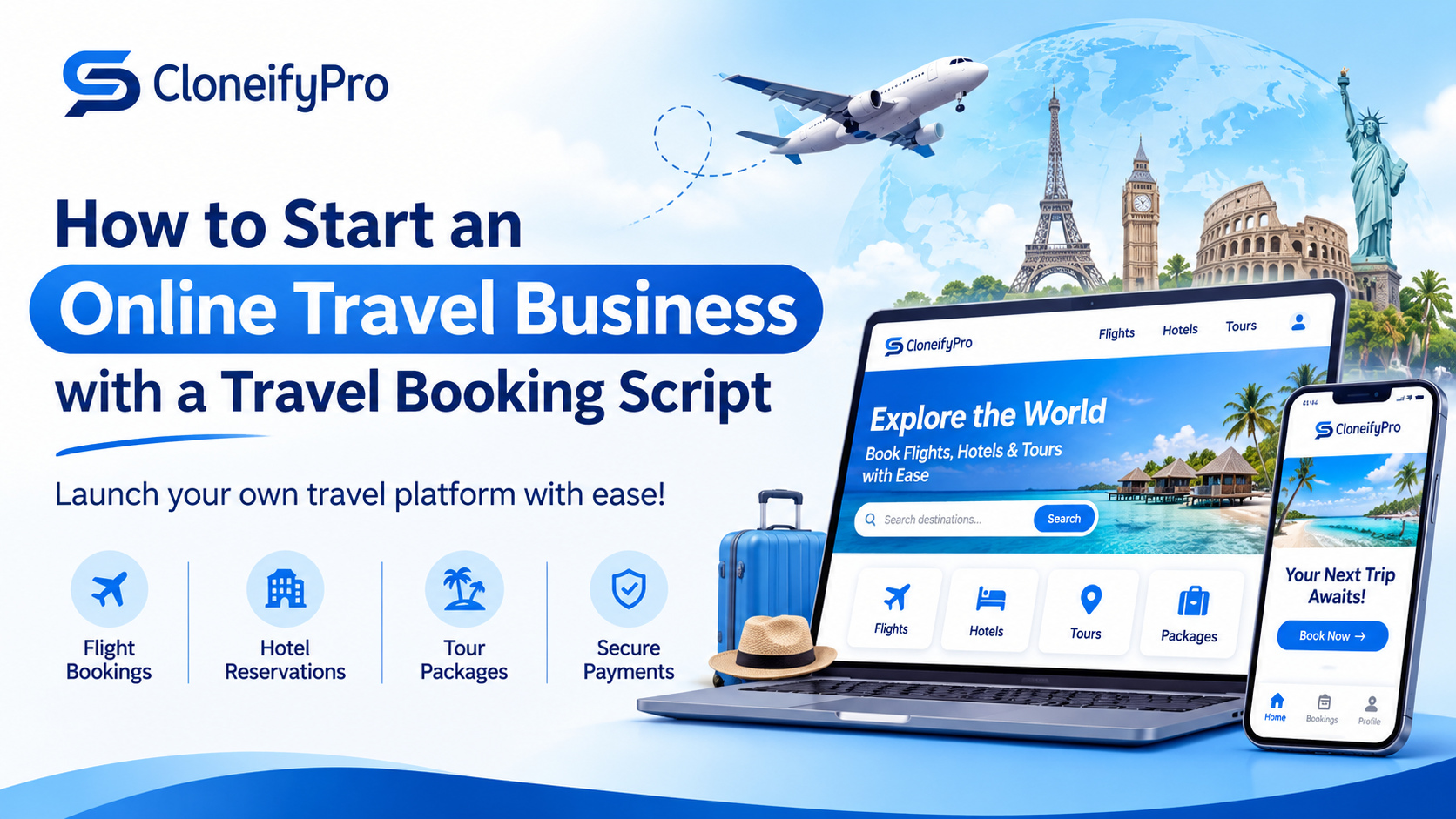
The way people plan and book trips has changed significantly. Instead of visiting multiple travel agencies or making several phone calls, customers now prefer to explore destinations, compare travel options, check availability, and make reservations online. This shift has created opportunities for entrepreneurs and travel agencies looking to establish or expand their presence in the digital travel market.
However, starting an online travel business involves more than simply creating a website. You need a platform that can display travel services, manage reservations, process payments, organize customer information, and support daily operations. Developing all these features independently can require considerable time, technical expertise, and investment.
This is where a Travel Booking Script becomes useful. It provides a ready-made software foundation for launching an online travel booking platform without building every component from scratch.
Let's explore how you can use this solution to start an online travel business, choose the right business model, and create a platform that meets customer expectations.
A Travel Booking Script is a pre-built software solution that helps entrepreneurs, travel agencies, and tour operators create their own online travel booking websites or applications. It provides essential functionality for displaying travel services, accepting reservations, managing bookings, and handling customer interactions.
Depending on the software and its integrations, a travel booking platform may support services such as:
Flight reservations
Hotel and accommodation bookings
Tour packages and holiday deals
Travel itinerary management
Online payment processing
Customer registration and booking history
Booking notifications and confirmations
For example, imagine a customer planning a family vacation. They visit your website, explore available holiday packages, review accommodation options, select their preferred dates, and complete a reservation. Your platform helps coordinate this process through a centralized booking system.
Instead of managing every enquiry manually, you can organize important booking activities through a digital platform.
Launching an online travel business becomes easier when you approach it step by step. Before investing in software or marketing, establish what kind of travel service you want to offer and who your customers will be.
The first step is deciding what type of travel business you want to operate. Your business model determines the services you offer, the customers you target, and the features your booking platform needs.
Some popular options include:
Online Travel Agency (OTA): An online travel agency allows customers to discover and book travel services through a single website or application. Depending on your partnerships and integrations, you may offer flights, hotels, holiday packages, and other travel-related services.
Tour and Travel Package Platform: This model focuses on curated holiday packages, sightseeing experiences, guided tours, and customized travel itineraries. It can be suitable for entrepreneurs who want to work with local tour operators and destination service providers.
Hotel Booking Platform: If accommodation is your primary focus, you can build a platform where customers search for hotels, compare room options, check availability, and make reservations.
Travel Marketplace: A multi-provider marketplace allows different travel businesses, tour operators, or accommodation providers to list their services on your platform. You can manage participating providers while giving customers access to multiple options.
Choose a model based on your market research, available partnerships, operational capacity, and customer demand. You do not need to offer every travel service from the beginning.
Before launching, understand who is most likely to use your platform.
Your potential customers may include:
Families planning domestic or international holidays
Business travellers looking for convenient reservations
Couples searching for customized vacation packages
Solo travellers exploring affordable travel options
Groups interested in guided tours and organized trips
Next, study competing travel platforms. Look at their service categories, booking processes, pricing presentation, customer reviews, cancellation policies, and support options.
Pay attention to customer complaints. For example, if travellers frequently mention unclear refund policies or difficulty contacting support, these issues could help you identify opportunities to improve your own service.
You should also research the destinations and travel services you plan to offer. Understanding local demand, seasonal booking patterns, and supplier availability can help you make more informed business decisions.
Once your business model is clear, choose the technology that will power your platform.
Building custom software gives you control over the development process, but it can involve a longer development cycle, technical resources, testing, and ongoing maintenance.
A ready-made Travel Booking Script offers another approach. It provides an existing software foundation with common booking and management capabilities, which can reduce the work involved in developing a platform from the beginning.
Before selecting a solution, evaluate the following:
Booking functionality: Can customers search for services, view details, and make reservations conveniently?
Integration capabilities: Can the platform connect with suitable flight, hotel, and payment providers?
Customization: Can you adjust the branding, design, booking workflow, and modules?
Administration: Does it provide tools to manage customers, reservations, services, and transactions?
Mobile responsiveness: Can customers use the platform comfortably on smartphones and tablets?
Security: Does the provider explain its security practices, data handling, and update process?
Technical support: Is assistance available during setup and after deployment?
Do not choose software based only on the number of advertised features. Make sure those features match your actual business requirements.
After selecting the software, configure it according to your business identity and service offerings.
Start with the essentials:
Business Branding: Add your business name, logo, brand colours, and contact information. Your website should communicate clearly who operates the platform and how customers can reach you.
Service Categories: Organize flights, hotels, tour packages, or other services into clear sections. A well-structured website helps customers find relevant options without unnecessary navigation.
Service Information: Display accurate descriptions, pricing details, available dates, inclusions, exclusions, and important booking conditions.
Customer Accounts: Give users a convenient way to access their booking details, personal information, and reservation history.
Booking Management: Make sure your internal team can review reservations, update booking statuses, and respond to customer requests.
Before going live, test the complete customer journey. Check whether users can navigate the website, submit booking information, complete payment steps, and receive the appropriate confirmation.
A travel booking website is only useful when it can offer services that customers can actually reserve.
For flight and hotel bookings, you may need integrations with third-party suppliers, aggregators, or travel inventory providers. These integrations can help your platform retrieve relevant information such as availability, pricing, and booking details.
However, an API connection does not automatically guarantee access to every airline, hotel, or travel service. Availability depends on the provider, commercial agreements, API permissions, and supported booking workflows.
Payment integration is equally important. Choose payment providers that support your target markets and currencies. Review transaction fees, settlement periods, supported payment methods, refund capabilities, and security requirements.
You should also establish clear procedures for handling failed payments, duplicate transactions, booking cancellations, and refunds.
An online travel business needs a sustainable way to generate revenue. Your earning model will depend on the services you provide and the agreements you have with suppliers.
Common revenue models include:
Commission-Based Revenue: Earn a commission for eligible bookings completed through your platform. The commission percentage depends on your supplier agreements and service category.
Service Fees: Charge customers a clearly disclosed booking or convenience fee where permitted and appropriate.
Package Pricing: Create travel packages by combining accommodation, transportation, and experiences. Your revenue comes from the difference between your selling price and the total service cost.
Supplier Partnerships: Work with hotels, tour operators, and other travel providers under mutually agreed commercial arrangements.
Premium Services: Offer optional services such as customized itineraries, dedicated travel assistance, or specialized holiday planning.
Before finalizing a revenue model, calculate your operating expenses, marketing costs, payment processing charges, customer support expenses, and potential refund liabilities. A business model that looks profitable on individual bookings may not remain profitable after all operating costs are considered.
Before announcing your platform, make sure the business is operationally ready.
Create clear policies for booking changes, cancellations, refunds, customer complaints, and supplier responsibilities. Display these policies where customers can find them before making a reservation.
Depending on your country, business structure, and services, you may need to review applicable business registration, taxation, consumer protection, privacy, payment, and travel-industry requirements. If you sell international travel services, also consider the rules applicable to your target markets and suppliers. Consult qualified professionals where necessary.
Prepare a customer support process so travellers know where to go when a booking issue occurs. Test your payment and notification workflows, review website performance on mobile devices, and verify that all service information is accurate.
A controlled launch with a limited number of destinations or services can help you identify operational problems before expanding.
The right features can make a significant difference to both customer experience and daily business management. While requirements vary by business model, consider these important capabilities:
|
Feature |
How It Helps Your Business |
|
Advanced Search and Filters |
Helps customers find suitable travel options based on their preferences |
|
Booking Management |
Organizes reservations, booking statuses, and customer details |
|
Flight and Hotel Integrations |
Connects the platform with supported third-party travel inventory providers |
|
Secure Payment Integration |
Enables convenient online transactions through supported payment gateways |
|
Admin Dashboard |
Provides centralized control over platform activities |
|
Vendor Management |
Helps manage participating suppliers or service providers |
|
Automated Notifications |
Keeps customers informed about relevant booking updates |
|
Responsive Design |
Supports convenient access across desktop and mobile devices |
|
Multi-Language and Currency Support |
Helps serve customers across different regions when properly configured |
The key is to prioritize functionality that solves real problems for your customers and team. Adding unnecessary features at the beginning can increase complexity without improving the booking experience.
Choosing the right software partner is an important part of building your online travel business. You need a solution that supports your business requirements and provides a practical foundation for future customization.
CloneifyPro offers a ready-made Travel Booking Script designed for travel agencies, tour operators, and online travel portals. According to its product information, the solution includes capabilities for managing tour packages, hotel bookings, flight reservations, payment processes, and customer-facing booking activities.
It also highlights features such as a responsive interface, an administration panel, customizable modules, and API integration capabilities for supported travel and payment services.
Rather than developing every component independently, you can explore this ready-made solution as a starting point for your business.
Visit the CloneifyPro Travel Booking Script page to review the solution and understand whether its available features align with your business model.
Before purchasing, discuss your exact requirements with the provider. Confirm which integrations are included, what requires additional configuration, how supplier connections work, what customization is available, and what support is provided after deployment.
Starting an online travel business requires a clear business model, an understanding of customer expectations, reliable service providers, and software that can support the booking process.
A Travel Booking Script can simplify the technology side by providing a ready-made foundation for building and managing an online booking platform. However, long-term success depends on more than software. Your supplier relationships, service quality, transparent policies, customer support, and marketing strategy all contribute to the overall experience.
Start with a focused service offering, validate customer demand, and improve your platform as you learn from real bookings and customer feedback. With the right planning and technology, you can build a travel business that makes trip planning more convenient for customers while creating opportunities for sustainable growth.
Building a successful online travel business requires more than booking technology; it also involves establishing reliable supplier relationships and earning customer trust. Organizations such as the International Air Transport Association (IATA) provide travel agent accreditation programs that can help eligible agencies strengthen their industry credibility and airline partnerships.
Start by focusing on a specific audience or destination instead of marketing every travel service at once. Build relationships with local travel communities, hotels, tour operators, and destination-related businesses. Publish useful destination guides, create social media content, and encourage satisfied early customers to share genuine reviews. Targeted promotions can also help you understand which services attract the most enquiries.
Make your business information easy to verify. Display accurate contact details, transparent pricing, clear booking conditions, and accessible customer support information. Publish genuine customer feedback when available and explain how reservations, cancellations, and refunds are handled. Avoid making claims about supplier partnerships, certifications, or service guarantees unless you can substantiate them.
Establish a clear payment and booking reconciliation process. First, verify the transaction status with your payment provider and check whether the supplier actually confirmed the reservation. If the booking was not completed, communicate the situation to the customer and follow the applicable refund or resolution process. Your platform and support team should have a documented procedure for these situations.
Provide accurate service descriptions and make important booking conditions visible before payment. Explain cancellation deadlines, refund eligibility, date-change rules, additional charges, and supplier-specific restrictions. Send confirmation messages containing the relevant booking details. Clear expectations can reduce misunderstandings and help customers make informed decisions.
Yes, but international expansion requires preparation. Consider local currencies, supported payment methods, language preferences, time zones, customer support coverage, and the legal requirements of the markets you intend to serve. You should also verify whether your travel suppliers and integrations support the destinations and services you want to offer.
Track metrics that help you understand both customer behaviour and business performance. Useful indicators include website traffic, search-to-booking conversion rate, booking completion rate, average booking value, cancellation rate, customer acquisition cost, repeat booking rate, refund volume, and customer support response time. Review these figures regularly to identify where customers experience difficulties and where your business can improve.