The way people buy and sell products has changed considerably with the growth of digital marketplaces. Today, consumers can discover pre-owned clot...



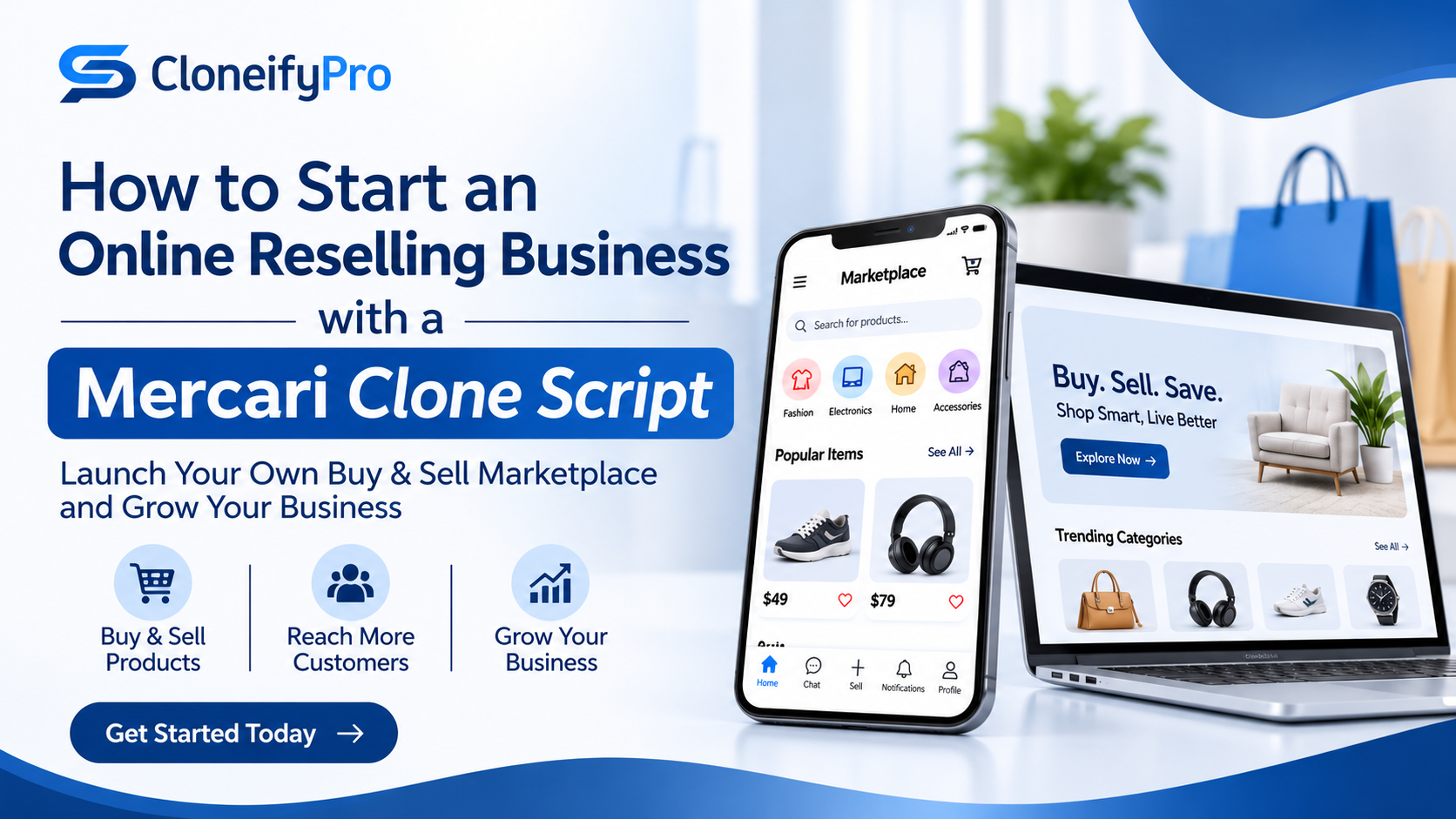
The way people buy and sell products has changed considerably with the growth of digital marketplaces. Today, consumers can discover pre-owned clothing, electronics, furniture, accessories, and other products without visiting traditional stores. At the same time, individuals looking to earn extra income have found new opportunities to sell unused belongings through online platforms.
This shift has created interesting possibilities for entrepreneurs who want to establish their own online reselling businesses. However, building a successful marketplace requires more than creating a website or mobile application. You need the right technology, a clear business model, convenient buying and selling experiences, and a strategy to attract both buyers and sellers.
A Mercari Clone Script can provide a practical starting point for entrepreneurs interested in entering this industry. It offers a ready-made marketplace foundation with essential functionalities that can be customized to match different business requirements.
Whether you are a startup founder, an established business owner, or someone exploring a new digital business opportunity, understanding how this solution works can help you make informed decisions.
Let's explore how to start an online reselling business and what you should consider before launching your marketplace.
A Mercari Clone Script is a ready-made software solution designed to help entrepreneurs launch an online peer-to-peer buying and selling marketplace.
It provides the essential functionality required for users to register, create product listings, browse available items, communicate with sellers, and manage transactions through a digital platform.
The marketplace owner can operate the platform under their own brand, customize its appearance, and configure its features according to their business model.
Depending on the target audience, the marketplace can support multiple product categories, such as:
Pre-owned clothing and fashion accessories
Smartphones, laptops, and electronic gadgets
Furniture and home appliances
Books, toys, and collectibles
Sports and fitness equipment
Handmade products and lifestyle accessories
Rather than developing every component individually, entrepreneurs can begin with an existing software foundation and concentrate on building their brand and customer base.
Online reselling has become an attractive business model because it connects people who want to sell products with customers looking for affordable alternatives.
There are several reasons why entrepreneurs are exploring this opportunity.
Many consumers consider second-hand products because they can offer affordability and access to items that may no longer be available through traditional retailers.
A well-organized marketplace makes it easier for buyers to discover relevant listings while helping sellers reach interested customers.
You don't have to launch a general marketplace that sells everything.
You could begin with a specific category, such as pre-owned fashion, electronics, furniture, or children's products.
A focused approach can help you understand your audience, develop relevant features, and create marketing campaigns that address specific customer needs.
An online marketplace can generate revenue through transaction commissions, featured listings, seller subscriptions, and advertising.
This flexibility allows business owners to experiment with different monetization methods as their platform develops.
You can initially introduce your marketplace in a particular city or region before expanding to additional locations.
Starting locally can help you understand customer preferences, shipping requirements, seller expectations, and operational challenges before entering larger markets.
Launching a marketplace becomes easier when you approach it with a clear plan. Here are the important steps to consider.
Before investing in technology, understand the people you want to serve.
Consider whether your marketplace will target individual sellers, small businesses, bargain hunters, collectors, or customers interested in sustainable shopping.
Research existing marketplaces and identify common customer frustrations.
For example, sellers may find product listing processes complicated, while buyers may want better search filters, transparent product information, or easier communication.
These insights can help you create a marketplace that addresses real customer requirements instead of simply replicating existing functionality.
Your business model determines how buyers and sellers will interact and how your platform will generate revenue.
Some common approaches include:
Peer-to-Peer Marketplace: Individual users can list their products and sell directly to other registered users.
Commission-Based Marketplace: The platform collects a percentage or fixed fee from eligible completed transactions.
Classified Listing Marketplace: Sellers publish advertisements, and interested buyers contact them to discuss purchases.
Niche Reselling Marketplace: The platform concentrates on a particular product category, such as used electronics, fashion, or furniture.
You can also combine different approaches depending on your business objectives.
Technology is one of the most important decisions when starting an online reselling business.
Developing a marketplace from scratch offers flexibility, but it also requires development resources, technical planning, testing, and ongoing maintenance.
A ready-made solution provides another approach.
A Mercari Clone Script offers a pre-developed foundation with essential marketplace functionality. Entrepreneurs can customize the solution according to their brand identity, target audience, and operational requirements.
Before selecting a provider, evaluate:
Source code availability and ownership terms
Customization possibilities
Website and mobile application compatibility
Payment gateway integration options
Security practices
Scalability and technical architecture
Documentation and technical support
Deployment and maintenance requirements
The objective is to choose software that supports your immediate business needs while allowing room for future development.
A successful marketplace should make buying and selling convenient.
Imagine someone trying to sell a used smartphone. They should be able to register, upload product photographs, enter the price, describe the item's condition, and publish the listing without unnecessary steps.
Similarly, buyers should be able to search for products, compare available options, contact sellers, and understand the purchasing process.
Focus on simple navigation, clear product information, mobile-friendly layouts, and an easy listing process.
A convenient experience can encourage users to explore more products and return to your platform.
Payment and delivery arrangements are essential to marketplace operations.
Depending on your business model, you may need payment gateway integration, order tracking, shipping arrangements, cancellation management, and refund procedures.
Decide whether sellers will manage their own deliveries or whether your platform will coordinate shipping through logistics partners.
Make sure users understand transaction fees, delivery charges, payment timelines, and refund conditions before completing purchases.
Trust is essential when buyers and sellers interact through an online platform.
Create clear policies covering prohibited products, counterfeit goods, misleading descriptions, payment disputes, cancellations, and inappropriate user behaviour.
Consider implementing account verification, secure authentication, listing moderation, reporting tools, and transaction monitoring.
Publish transparent terms of service and privacy policies so users understand how the marketplace operates.
The functionality of your platform directly influences the experience you provide to buyers and sellers.
Here are some important features to consider.
Allow users to create accounts, update personal details, manage their profiles, and review their marketplace activities.
Sellers should be able to upload product images, add descriptions, select categories, set prices, and manage their listings.
Search functionality helps buyers discover relevant products quickly.
Useful filters include category, price range, product condition, location, and listing relevance.
An integrated messaging feature allows buyers and sellers to discuss product details, availability, and delivery arrangements.
Integrate suitable payment gateways based on your target market. Ensure that transactions follow appropriate security practices and that payment conditions are clearly communicated.
Feedback mechanisms allow users to share their experiences and help other customers make informed purchasing decisions.
Notifications can inform users about new messages, order updates, listing activity, and other relevant marketplace events.
Administrators need a central dashboard to manage users, product listings, categories, transactions, reports, and marketplace activities.
Choose features based on your actual business requirements rather than adding unnecessary functionality.
A sustainable revenue model is important for the long-term development of your business.
Here are five monetization methods worth exploring.
1. Transaction Commissions
Collect a percentage or fixed fee from eligible completed transactions. Clearly communicate the commission structure to sellers.
2. Featured Product Listings
Allow sellers to pay for additional product visibility through promoted placements within relevant marketplace sections.
3. Seller Subscription Plans
Introduce optional monthly or annual subscriptions with benefits such as additional listings, enhanced seller tools, or promotional opportunities.
4. Advertising Revenue
Generate income through relevant advertising placements while ensuring that advertisements do not interfere with the browsing experience.
5. Premium Marketplace Services
Offer additional services such as seller analytics, enhanced business accounts, or promotional campaign opportunities.
You can begin with one revenue stream and introduce additional options as your marketplace gains users.
Even a technically advanced platform needs an active community to succeed.
Without enough product listings, buyers may not find what they need. Similarly, sellers may lose interest if there are not enough potential customers.
Here are some practical ways to build your initial marketplace community.
Start with a Specific Location: Focus on a city or region before expanding into new markets.
Target a Product Niche: Build relationships with communities interested in your selected category.
Invest in Search Engine Optimization: Publish informative blogs, buying guides, selling tips, and category-related articles.
Use Social Media Marketing: Share product highlights, seller experiences, and marketplace updates.
Encourage Early Sellers: Consider introductory listing benefits to build your initial product inventory.
Build Customer Confidence: Communicate marketplace policies clearly and provide accessible customer support.
Remember that attracting users is only the beginning. Providing a reliable experience is equally important for encouraging repeat activity and long-term engagement.
Selecting a suitable technology partner can make the marketplace development process more manageable.
CloneifyPro provides a ready-made Mercari Clone Script designed to help entrepreneurs, startups, and businesses establish their own online buying and selling marketplace.
The solution offers a foundation for building a branded marketplace with functionalities such as:
User registration and profile management
Product listing and management
Search and filtering options
Wishlist functionality
Real-time messaging
Seller profiles and ratings
Payment gateway integrations
Order management
Notifications
Administrative dashboard
CloneifyPro also highlights customization, source code availability, documentation, technical support, and deployment assistance as part of its solution offering.
Entrepreneurs can explore the product to understand its capabilities and evaluate whether it meets their business requirements.
Explore CloneifyPro's Mercari Clone Script and Start Building Your Online Reselling Marketplace
Before purchasing, request a demonstration and confirm the exact features, customization scope, licensing terms, deployment requirements, and support included in your selected package.
Starting an online reselling business requires a combination of market research, suitable technology, customer-focused planning, and consistent marketing.
You don't necessarily need to compete with established marketplaces across every product category. Starting with a specific audience, understanding its requirements, and gradually expanding your services can be a more manageable approach.
A Mercari Clone Script can provide the technological foundation for turning your marketplace idea into a working platform. However, long-term success will depend on how effectively you attract buyers and sellers, maintain marketplace trust, and improve the overall user experience.
Take time to evaluate your business model, choose the right features, and build a platform around genuine customer needs. With thoughtful planning and continuous improvement, you can work toward establishing a sustainable online reselling business.
A Mercari Clone Script is a ready-made software solution that helps entrepreneurs launch their own online buying and selling marketplace. It provides essential functionalities such as user registration, product listings, search filters, messaging, payment integration, and order management, allowing businesses to establish a branded reselling platform.
A Mercari Clone Script connects buyers and sellers through a centralized online marketplace. Sellers can register, upload product images, add descriptions, and set prices, while buyers can browse listings, search for products, communicate with sellers, and make purchases through supported payment methods. Administrators manage users, listings, transactions, and other marketplace activities.
An effective Mercari Clone Script should include user registration, profile management, product listing management, advanced search and filters, real-time messaging, payment gateway integration, ratings and reviews, push notifications, and an admin dashboard. These features help create a convenient experience for buyers, sellers, and marketplace administrators.
Yes, customization depends on the solution and licensing package offered by the provider. Businesses can explore options for modifying branding, application design, product categories, marketplace functionality, and other components according to their requirements. Before purchasing, confirm the available customization options with the software provider.
You can generate revenue through several monetization strategies, including transaction commissions, featured product listings, seller subscription plans, advertising placements, and premium marketplace services. The right approach depends on your target audience, business model, and marketplace requirements.